If you've read anything about AI search this year, you've probably seen llms.txt described as the "robots.txt for AI." Some guides say every website needs one. Others say it does nothing. Both are partly right.
Here's what llms.txt is, what the evidence says about who actually reads it, and whether it's worth adding to your website.
What is llms.txt?
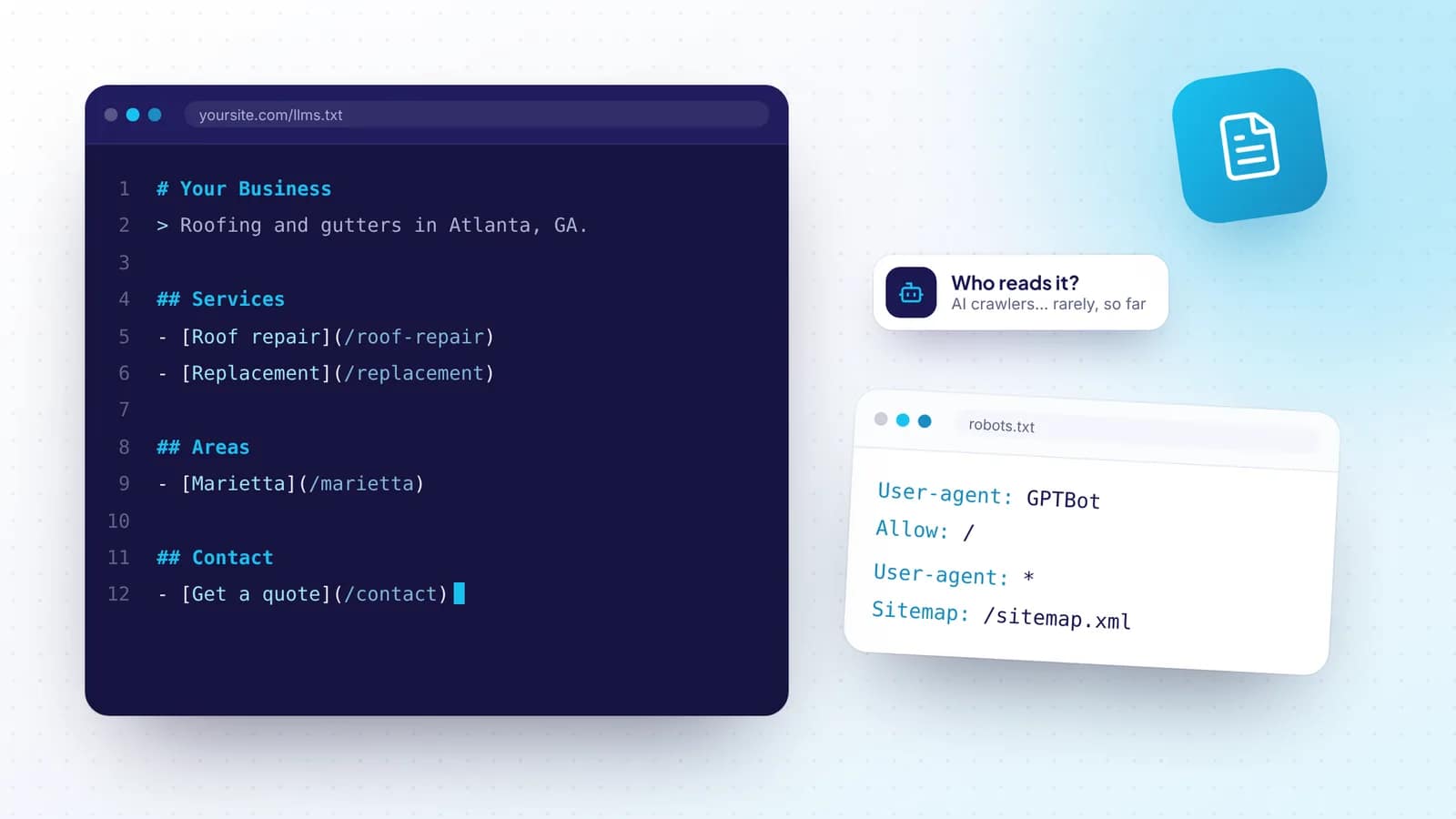
llms.txt is a plain-text file, written in Markdown, that sits at the root of a website (for example, yoursite.com/llms.txt). It was proposed in 2024 as a simple guide for large language models: a short summary of what the site is about and a list of links to its most important pages.
A basic llms.txt file has:
- A heading with the name of the business or project
- A one- or two-sentence summary
- Sections that list key pages with a short description of each, such as services, pricing information, documentation or contact details
Some sites also publish llms-full.txt, which contains the full text of key pages in one file.
How is llms.txt different from robots.txt?
They do different jobs.
| robots.txt | llms.txt | |
|---|---|---|
| Purpose | Tells crawlers what they may and may not access | Suggests which pages matter most and summarizes them |
| Status | Long-established standard that major crawlers follow | A proposal, not an official standard |
| Controls access? | Yes, for crawlers that respect it | No |
| Used by Google Search? | Yes | No |
If you want to allow or block AI crawlers such as GPTBot or ClaudeBot, that happens in robots.txt, not llms.txt.
Does llms.txt actually work?
The data so far says: not much, yet.
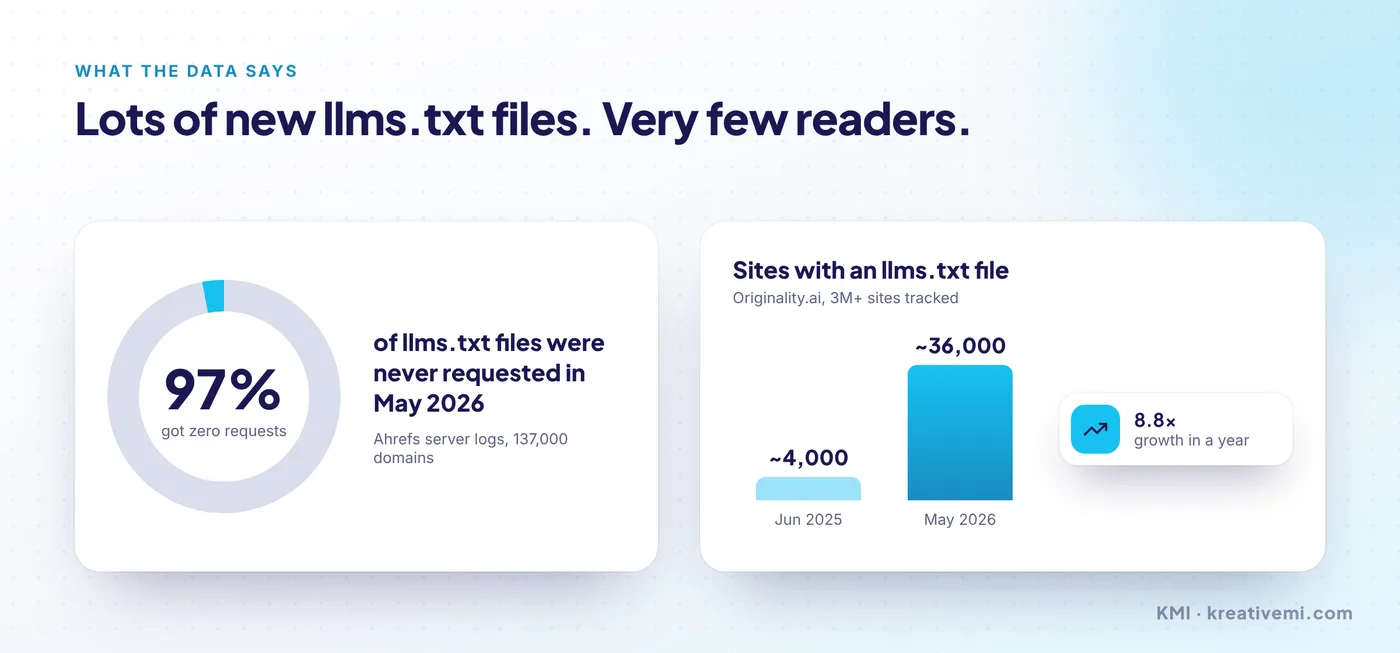
- Adoption is growing fast from a small base. Originality.ai tracked more than 3 million websites and found llms.txt files on about 4,000 sites in June 2025, rising to about 36,000 by May 2026.
- Most files are never read. Ahrefs studied server logs across 137,000 domains and found that 97% of llms.txt files received no requests at all in May 2026. AI retrieval bots, the ones that fetch pages to answer a user's question, made up only about 1% of the requests that did arrive.
- Google doesn't use it for Search. Google's guidance says llms.txt won't help or hurt your visibility or rankings, and in June 2026 it added a note that llms.txt files are not required for Google Search.
So llms.txt is not a ranking factor and will not, on its own, get you recommended by ChatGPT or Gemini.
So should you add one?
For most businesses, llms.txt is a small, low-cost "nice to have," not a priority. It takes less than an hour to create, does no harm and could become more useful if AI companies start reading it. Developer tools and documentation sites see the most benefit today, because coding assistants are more likely to fetch it.
What it shouldn't do is take time away from the things that do affect AI visibility.
What actually helps you show up in AI search
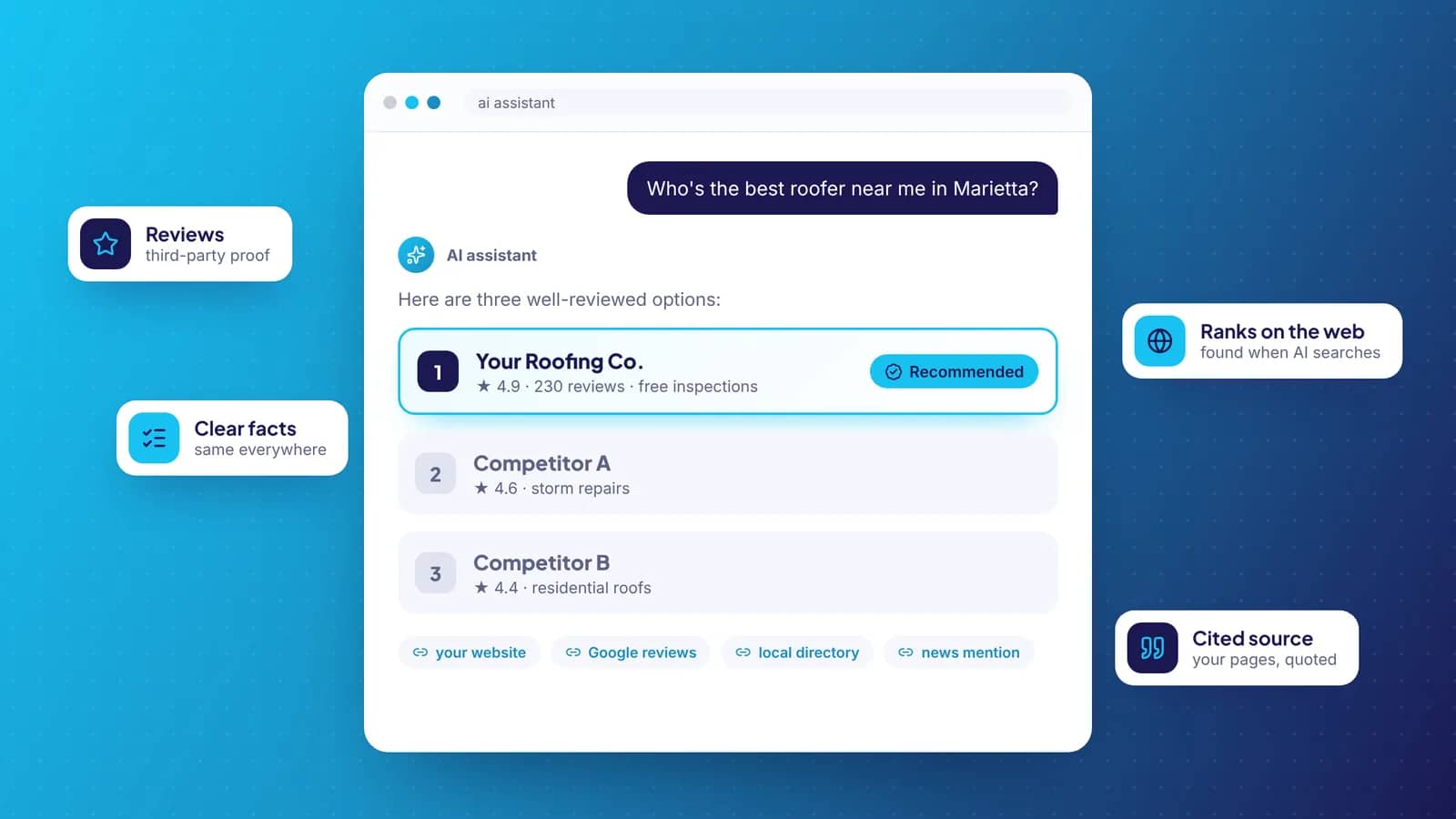
AI assistants recommend businesses they can find, understand and trust. These matter far more than llms.txt:
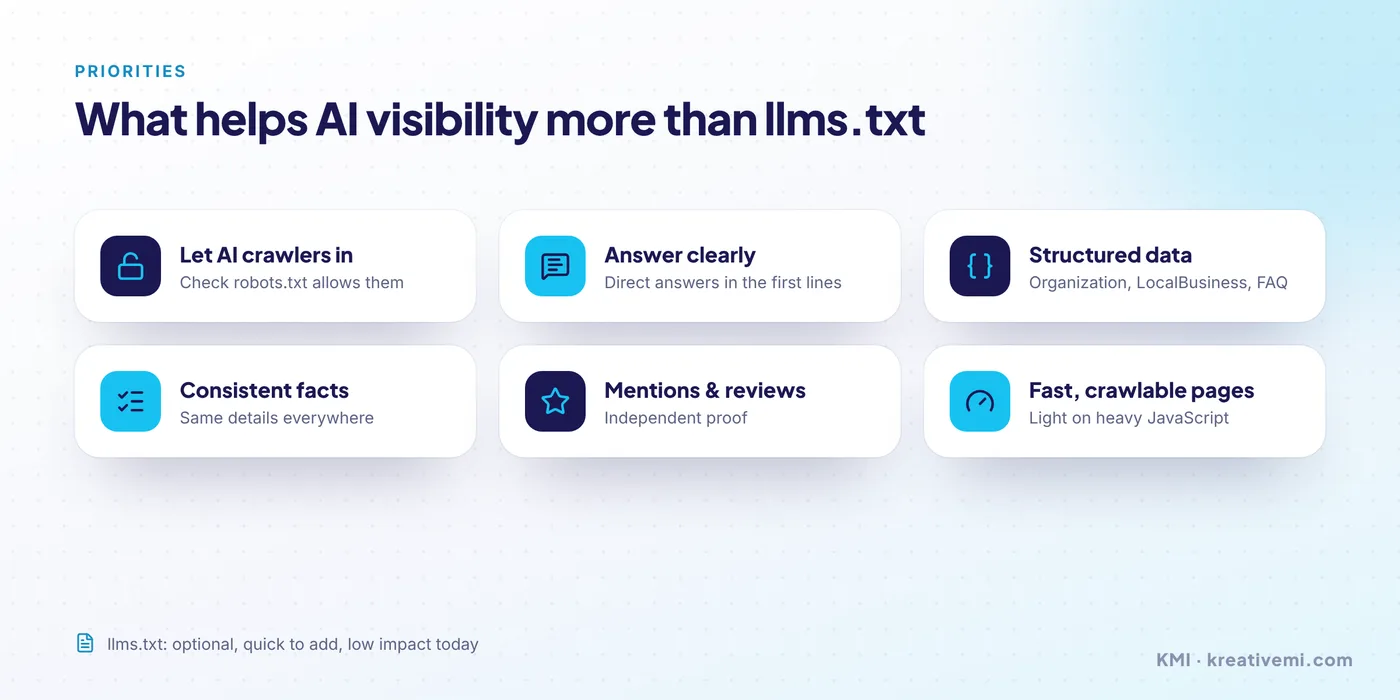
- Let AI crawlers in. Check that your robots.txt doesn't block search and AI crawlers you want to be found by.
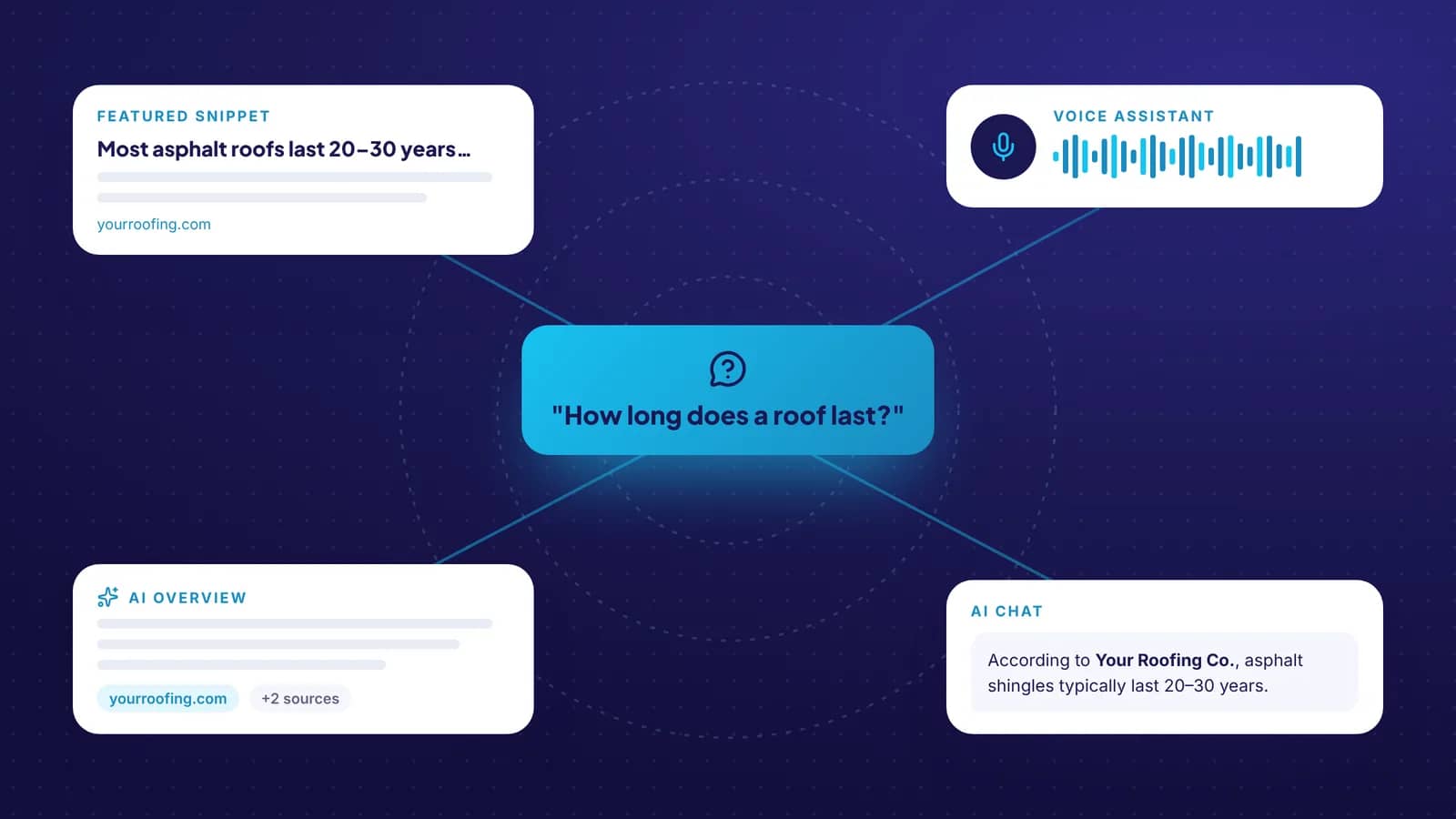
- Answer questions clearly. Put a direct answer in the first lines of your service and FAQ pages, written the way customers ask.
- Use structured data. Organization, LocalBusiness, service and FAQ schema help machines read your business facts correctly.
- Keep your facts consistent. Your name, address, phone, hours and services should match across your website, Google Business Profile and directories.
- Earn mentions and reviews. Independent sources such as reviews, local press and industry lists give AI tools a reason to trust and recommend you.
- Keep pages fast and crawlable. Content that loads slowly or only appears after heavy JavaScript is harder for crawlers to read.
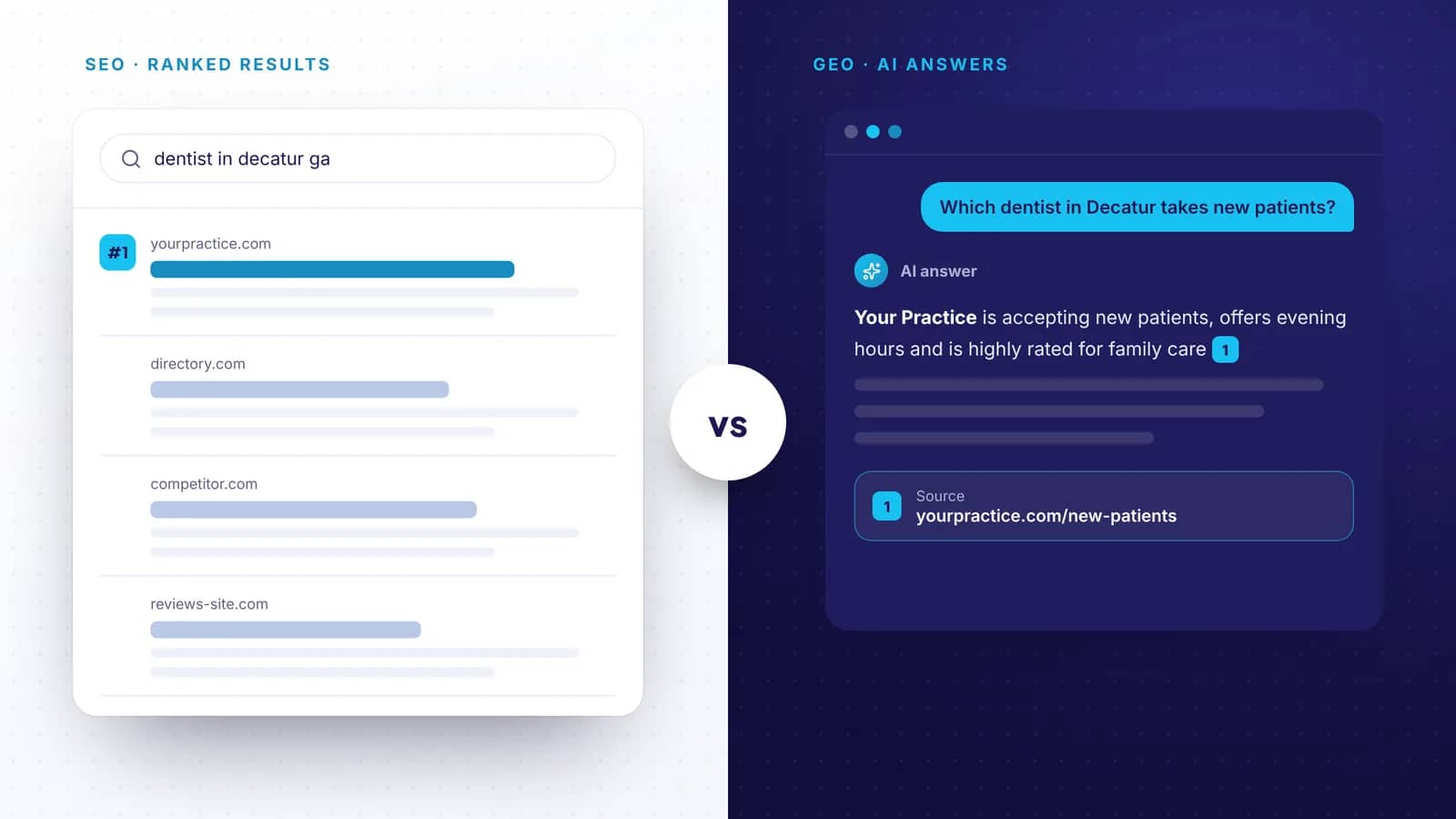
Our guide to generative engine optimization vs SEO explains how these fit together.
How to create an llms.txt file
If you decide to add one, keep it short and accurate:
- Create a file called llms.txt.
- Start with your business name as a heading, then a one-paragraph summary of what you do and who you serve.
- Add short sections (for example, Services, Locations, Resources, Contact), each with a list of links and one-line descriptions.
- Upload it to the root of your website so it loads at yoursite.com/llms.txt.
- Update it when you add or remove important pages.
Avoid stuffing it with keywords or copying whole pages into it. It's meant to be a clean summary.
Frequently asked questions
What is llms.txt?
llms.txt is a proposed plain-text file at the root of a website that summarizes the site and lists its most important pages for large language models. It isn't an official standard and doesn't control crawler access.
Does Google use llms.txt?
No. Google says llms.txt files are not required for Google Search and won't positively or negatively affect rankings or visibility.
Does llms.txt help my business show up in ChatGPT?
There's little evidence it does today. Ahrefs found that 97% of llms.txt files received no requests in May 2026. Clear content, structured data, consistent business facts and reviews matter far more.
Is llms.txt the same as robots.txt?
No. robots.txt tells crawlers which pages they may access. llms.txt only suggests important pages and summarizes them. To allow or block AI crawlers, use robots.txt.
Should a small business add llms.txt?
It's optional. It's quick to create and does no harm, but focus first on the basics that affect AI search. If you're unsure where you stand, try our free AI visibility check.
Sources: Originality.ai adoption tracking and Ahrefs server-log study, both reported by PPC Land in 2026, and Google Search Central guidance on AI features. Accurate as of November 2026.